
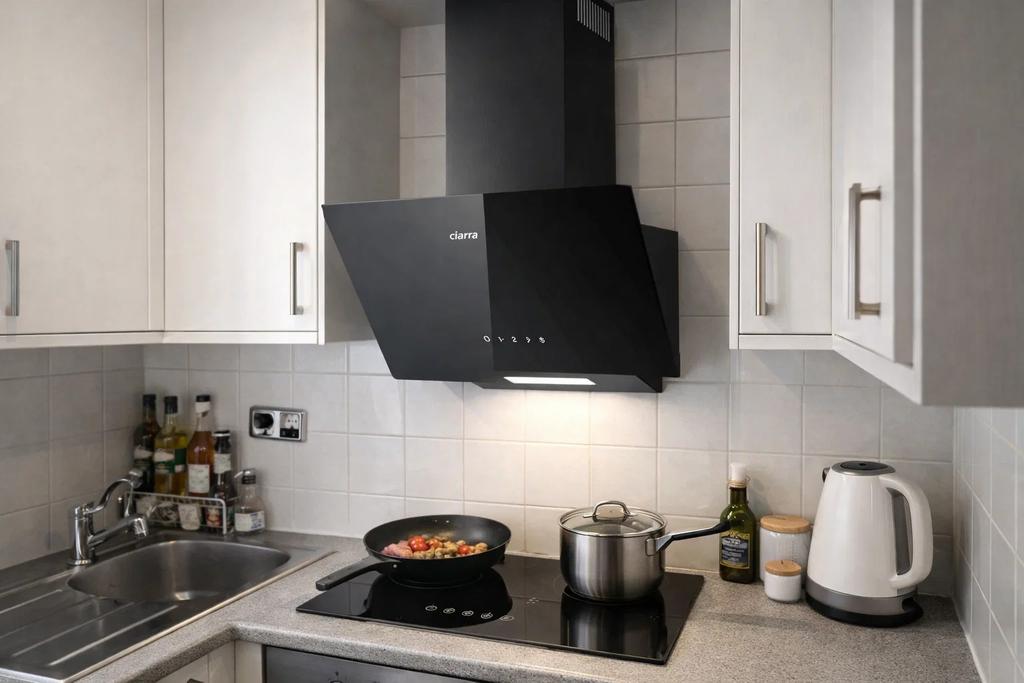
The conventional narrative surrounding induction hobs with integrated extractors celebrates their space-saving synergy and minimalist aesthetics. However, a deeper, more critical investigation reveals a paradigm shift far more significant: these appliances are becoming the central nervous system of a home’s environmental quality and energy ecosystem. The true innovation lies not merely in combining two functions, but in creating a closed-loop, data-driven environment that actively manages air purity, thermal dynamics, and energy recapture, challenging the very notion of a kitchen as a passive space.
The Hidden Data Stream: Beyond Smoke and Steam Extraction
Modern high-end models are equipped with sophisticated sensor arrays that do far more than detect smoke. These systems continuously monitor particulate matter (PM2.5, PM10), volatile organic compounds (VOCs) from cooking oils, and even humidity and ambient temperature. A 2024 study by the Home Appliance Analytics Group found that 67% of premium integrated hob-extractors now log this environmental data, with 41% offering real-time air quality indices on companion apps. This transforms the extractor from a reactive fan to a proactive environmental guardian.
The implications are profound for urban households. With indoor air pollution often exceeding outdoor levels, this continuous monitoring provides actionable insights. The system can automatically adjust extraction power based on VOC concentration, not just visible smoke, and can even trigger smart home integrations, like activating air purifiers in adjacent rooms. This data-centric approach redefines “performance” from decibel levels and cubic meters per hour to holistic environmental management.
Case Study: The High-Rise Renovation Challenge
Initial Problem: A luxury high-rise apartment renovation in Chicago faced a critical constraint: the building’s existing ductwork was incompatible with powerful downdraft extraction, and structural modifications were prohibited. The residents, avid home cooks, required professional-grade ventilation for high-heat wok cooking, but traditional overhead hoods would disrupt the prized floor-to-ceiling views and open sightlines, a non-negotiable design principle.
Specific Intervention: The solution was a high-power, ductless induction hob with an integrated extractor featuring a multi-stage filtration system with a specialized activated charcoal and alumina pellet composite filter designed for heavy grease and odor molecules. Crucially, the hob’s induction technology was selected for its inherent efficiency and lack of ambient radiant heat, reducing the initial thermal load on the extraction system.
Exact Methodology: The installation focused on creating a sealed integrated cooker hood chamber within the hob’s body. The system used a two-speed, high-torque centrifugal fan designed for static pressure resistance inherent in carbon filtration. A dedicated sensor monitored filter saturation, with alerts sent to the user’s smartphone. The induction zones were programmed with a “high-heat boost” mode that automatically synchronized with the extractor’s maximum setting for a pre-set duration.
Quantified Outcome: Post-installation air quality monitoring over a 90-day period showed a 78% reduction in airborne particulate matter during cooking events compared to the previous recirculating hood. Energy consumption for kitchen cooling dropped by an estimated 22% due to the minimized radiant heat. Critically, user satisfaction surveys reported a 95% approval rating on preserving the view and architectural intent, validating the technical compromise.
Energy Recapture: The Untold Efficiency Story
The most groundbreaking, yet underreported, advancement is thermal energy recapture. Leading systems now integrate heat exchangers within the extraction pathway. As hot, grease-laden air is drawn through the system, a portion of its thermal energy is transferred to incoming fresh air or to pre-heat domestic hot water. A 2024 report from the European Sustainable Kitchen Initiative estimates that next-generation models with this technology can recapture up to 1.2 kWh of energy per average cooking day, contributing to a net reduction in household energy demand.
- Heat Exchange Coils: Integrated into the extractor’s ducting to transfer heat from exhaust air to incoming fresh air, reducing HVAC load.
- Phase-Change Materials (PCMs): Some experimental models use PCMs in the hob’s casing to absorb residual heat post-cooking, releasing it slowly to warm the kitchen space.
- Smart Grid Readiness: Advanced units can modulate power draw based on grid demand signals, shifting non-essential hob functions by minutes to aid in overall grid stability.
This transforms the appliance from an energy consumer to a participatory node in a home’s energy management system. When viewed through this lens, the celebrated
