
In today’s digital world, understanding search optimization is no longer optional for beginners. One of the most important modern concepts is Website AEO and GEO Checker, which helps users understand how websites are optimized for both answer engines and geographic relevance.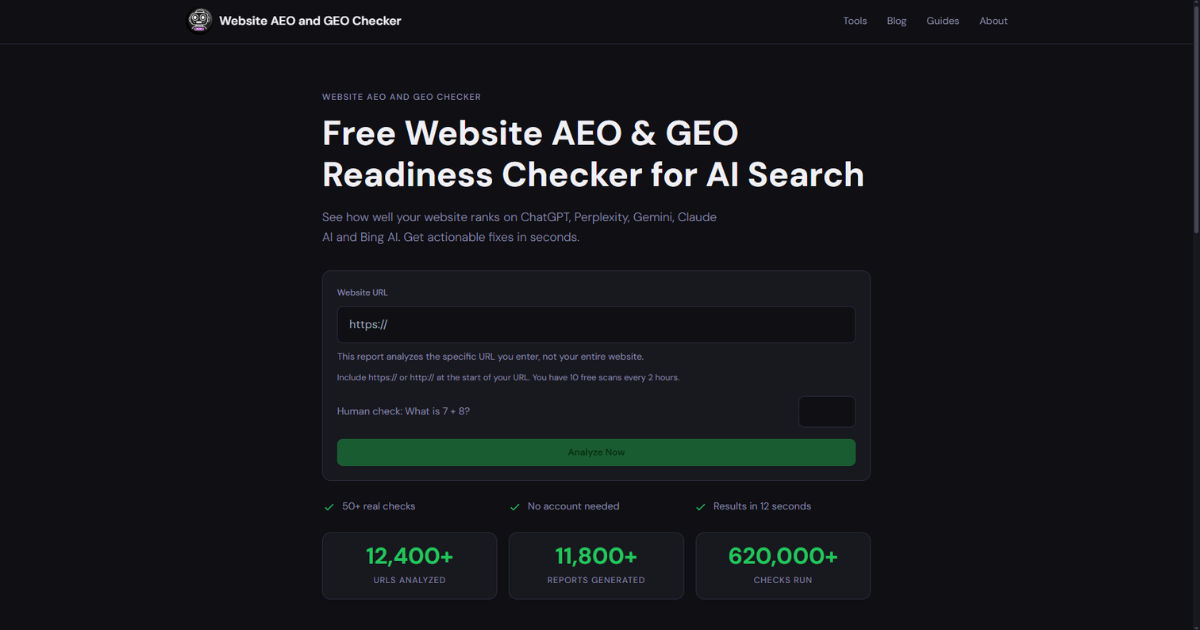
In this guide, we will explore what GEO means in the context of websites, how it works, and why beginners should care about it when building or optimizing a site using Website AEO and GEO Checker tools.
This article is designed for a 12th-grade reading level, so everything is explained in simple and clear language. You will learn step by step how GEO fits into modern SEO strategies and how tools like Website AEO and GEO Checker can help analyze performance and visibility.
What is GEO in Website Optimization?
GEO in website optimization stands for “Geographic Optimization.” It refers to the process of improving a website so that it performs better for users in specific locations.
For example, if someone searches for “best pizza near me,” search engines try to show results based on the user’s location. This is where GEO becomes important.
Modern SEO is no longer only about keywords. It is also about location relevance, user intent, and personalization. Tools like Website AEO and GEO Checker help website owners understand how well their pages are optimized for geographic targeting.
Why GEO Matters for Beginners
Many beginners focus only on keywords and backlinks. However, GEO plays a major role in search rankings today.
Here are a few reasons why GEO is important:
Local Search Visibility
Search engines prioritize local results for location-based queries. Using Website AEO and GEO Checker helps identify if your content is visible in your target region.
Better User Experience
Users prefer results that are close and relevant. GEO optimization improves engagement and reduces bounce rate.
Higher Conversion Rates
Local visitors are more likely to take action, whether it is buying a product or contacting a service provider.
Competitive Advantage
Small businesses can compete with larger brands by focusing on GEO strategies.
When beginners understand GEO, and apply insights from Website AEO and GEO Checker, they gain a strong advantage in digital marketing.
Difference Between GEO and Traditional SEO
It is important to understand how GEO differs from traditional SEO.
Traditional SEO
Traditional SEO focuses on:
- Keywords
- Backlinks
- Content quality
- Technical optimization
GEO Optimization
GEO focuses on:
- User location
- Regional relevance
- Local intent keywords
- Map listings and local signals
Using Website AEO and GEO Checker, beginners can compare both SEO and GEO performance to improve overall visibility.
How GEO Works in Search Engines
Search engines like Google use advanced algorithms to determine GEO-based results.
Step 1: User Location Detection
Search engines detect the user’s location through IP address or GPS data.
Step 2: Query Interpretation
If a search query has local intent, the system activates GEO filtering.
Step 3: Ranking Based on Proximity
Results closer to the user are ranked higher.
Step 4: Business and Website Authority
Trusted local websites get better rankings.
Tools like Website AEO and GEO Checker analyze how well your website matches these GEO signals.
Importance of Website AEO in GEO Optimization
AEO stands for Answer Engine Optimization. It focuses on making content easy for search engines to directly answer user queries.
When combined with GEO, it becomes powerful.
Why AEO and GEO Work Together
- AEO improves content clarity
- GEO improves location relevance
- Together they improve visibility in search engines
Beginners often use Website AEO and GEO Checker to evaluate both aspects in one place.
Key Elements of GEO Optimization
To understand GEO better, let’s break down its key elements.
Local Keywords
Using location-based keywords like “in Lahore” or “near me” helps search engines understand your target area.
Google Business Profile
Having a verified business listing improves GEO ranking.
NAP Consistency
Name, Address, and Phone number should be consistent across all platforms.
Local Backlinks
Links from local websites increase credibility.
Mobile Optimization
Most GEO searches happen on mobile devices.
All of these factors can be evaluated using Website AEO and GEO Checker.
How Beginners Can Start GEO Optimization
If you are just starting, follow these simple steps:
Step 1: Identify Target Location
Choose the city or region you want to target.
Step 2: Add Local Keywords
Include location names naturally in your content.
Step 3: Optimize Website Pages
Make sure your homepage and service pages include GEO signals.
Step 4: Use Analytics Tools
This is where Website AEO and GEO Checker becomes important for beginners.
Step 5: Track Performance
Monitor how your website performs in different locations.
Role of Content in GEO Strategy
Content is the foundation of GEO optimization.
Localized Blog Posts
Writing content about local topics improves GEO ranking.
Location-Based Landing Pages
Businesses can create pages for each city they serve.
FAQs with Local Intent
Answering location-based questions increases visibility.
Using Website AEO and GEO Checker, beginners can evaluate whether their content is GEO-friendly.
Common GEO Mistakes Beginners Make
Many beginners make mistakes that reduce their GEO performance.
Ignoring Local Intent
Not using location-based keywords.
Inconsistent Business Information
Different addresses or phone numbers across platforms.
Overstuffing Keywords
Using too many keywords without natural flow.
Not Using Tools
Ignoring analysis tools like Website AEO and GEO Checker.
Avoiding these mistakes can significantly improve rankings.
Benefits of Using Website AEO and GEO Checker
This tool is important for beginners and professionals alike.
Performance Analysis
It shows how well your website performs in search engines.
GEO Insights
It identifies location-based optimization gaps.
AEO Evaluation
It checks how well your content answers user queries.
Competitor Comparison
You can compare your GEO strength with competitors.
Overall, Website AEO and GEO Checker helps simplify complex SEO processes.
Advanced GEO Strategies
Once beginners understand basics, they can move to advanced strategies.
Hyperlocal SEO
Targeting very small areas like neighborhoods.
Voice Search Optimization
Many GEO searches come from voice assistants.
AI-Based Optimization
Using AI tools to improve GEO targeting.
Behavioral Signals
Tracking user behavior to refine GEO strategy.
Advanced users often rely heavily on Website AEO and GEO Checker for deeper insights.
GEO in the Future of SEO
The future of SEO is strongly connected to GEO.
Increased Personalization
Search engines will become more location-aware.
AI Integration
AI will improve GEO prediction accuracy.
Real-Time Location Ranking
Results will update based on live location data.
Beginners who learn GEO early and use Website AEO and GEO Checker will stay ahead in digital marketing.
Practical Example of GEO in Action
Imagine you own a bakery in Lahore.
A user searches “fresh cake near me.”
Search engines will:
- Detect user location
- Match nearby bakeries
- Show optimized listings
If your website is GEO-optimized and evaluated using Website AEO and GEO Checker, your bakery is more likely to appear in top results.
How Website AEO and GEO Checker Helps Beginners
This tool is extremely helpful for learning.
Easy Analysis
No technical skills required.
Clear Reports
Shows what needs improvement.
Actionable Suggestions
Helps users fix GEO issues.
Beginners can continuously improve using Website AEO and GEO Checker.
Conclusion
Understanding GEO is essential for modern website optimization. It helps websites connect with users based on location, improving visibility and engagement. When combined with AEO strategies, GEO becomes even more powerful for search performance.
For beginners, the most important step is learning how GEO affects rankings and how tools like Website AEO and GEO Checker simplify this process. By using these insights, anyone can improve their website’s performance, attract local users, and grow online presence effectively.
In the future of digital marketing, GEO will continue to play a major role, and those who understand it early will have a strong advantage.
